
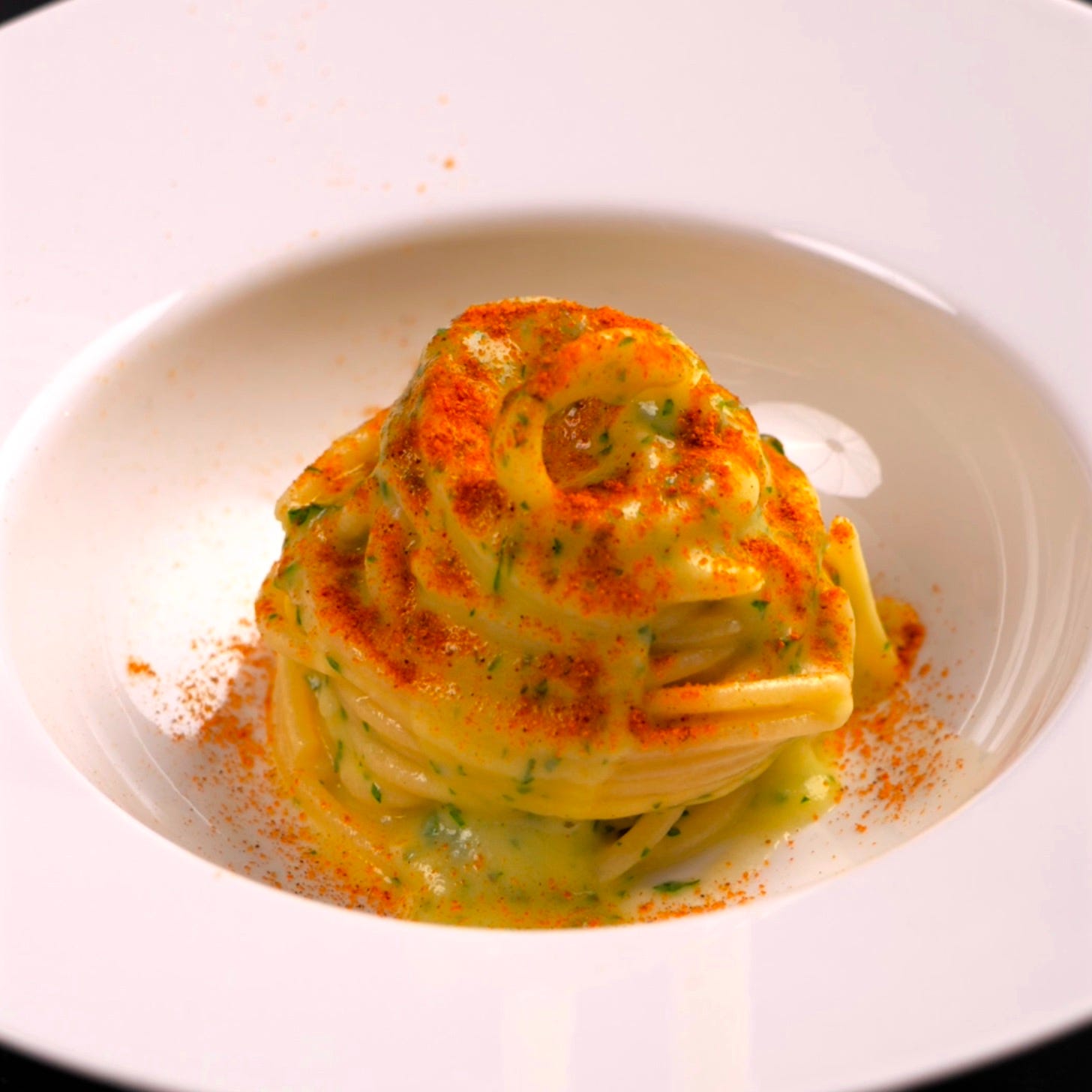
Most aglio e olio recipes are aggressive. Raw garlic flavor. High heat. Sharpness. This version does the opposite. The goal here is not intensity. It’s control. Rather than aggressively frying the garlic, it is repeatedly softened until it loses its harsh sulfur edge and develops a sweeter, rounder flavor. The result is an emulsion that feels creamy despite containing no cream. This is not the rustic version that most people know. It’s a refined interpretation built around texture, balance, and elegance.
For one serving:
Garlic - 100 g
Olive oil - 120 g
Pasta water - 120 g
Spaghetti - 120 g
Fresh parsley - to taste
Cayenne pepper - to taste
Salt - to taste
These quantities create a very sauce-forward result. You can reduce the emulsion slightly if you prefer a lighter coating.
1. Step: Prepare the garlic
Peel each clove and remove the germ. This matters. The germ often carries bitterness and strong sulfur notes that can become unpleasant when concentrated. Blanch the garlic repeatedly. Boil it in water for about one minute, then strain and let rest for another minute. Repeat this process four times. This step completely changes the flavor profile. The garlic will become softer, sweeter, and significantly more elegant. You’re not trying to eliminate the garlic flavor. You’re removing the harshness.
2. Step: Build the emulsion
Transfer the softened garlic to a blender with the olive oil and pasta water. Blend until completely smooth. The texture should be silky and pale, resembling garlic cream. This is the heart of the dish. Not fried garlic. Not toasted garlic oil. It’s an emulsion. Season lightly with salt.
The part that most people get wrong:
Most aglio e olio recipes call for frying the garlic directly in the oil. This method creates intensity quickly, but it also creates bitterness, heaviness, and instability. The garlic becomes dominant instead of being integrated. This technique works differently. First, the garlic is softened, then emulsified into the sauce itself. The result is much more controlled. You can still taste the garlic. But it tastes rounded instead of aggressive. This distinction is what makes this version feel refined.
3. Step: Cook the spaghetti
Cook the spaghetti until al dente. Transfer it directly into the garlic emulsion while it is still very hot. Toss aggressively. The starch from the pasta and pasta water will strengthen the emulsion and help the sauce coat the spaghetti evenly. Add freshly chopped parsley. The parsley should stay fresh and bright, not cooked down. Finish with cayenne pepper. Not too much. You want a hint of warmth, not overpowering heat.
Final texture & common mistakes:
The correct aglio e olio should have a glossy, fluid, light texture. The sauce should evenly coat the spaghetti without pooling at the bottom of the plate. The garlic flavor should be soft, sweet, and lingering — never sharp or harsh. Using aggressively browned garlic can create a bitter flavor. Using too little pasta water results in an oily sauce instead of an emulsion. Over-reducing the sauce makes the dish heavy. Using too much chili can destroy the balance.
Final Take:
This dish essentially consists of: Garlic emulsion, starch integration, and olive oil balance. It’s not fried garlic pasta. That’s the difference. The goal of this version is not to make the garlic more prominent. Rather, it’s to make the garlic smoother.


